

CLOSE

My Role: Product Designer
Project Details: Website Design, B2B, 2024
.png)
CONTEXT
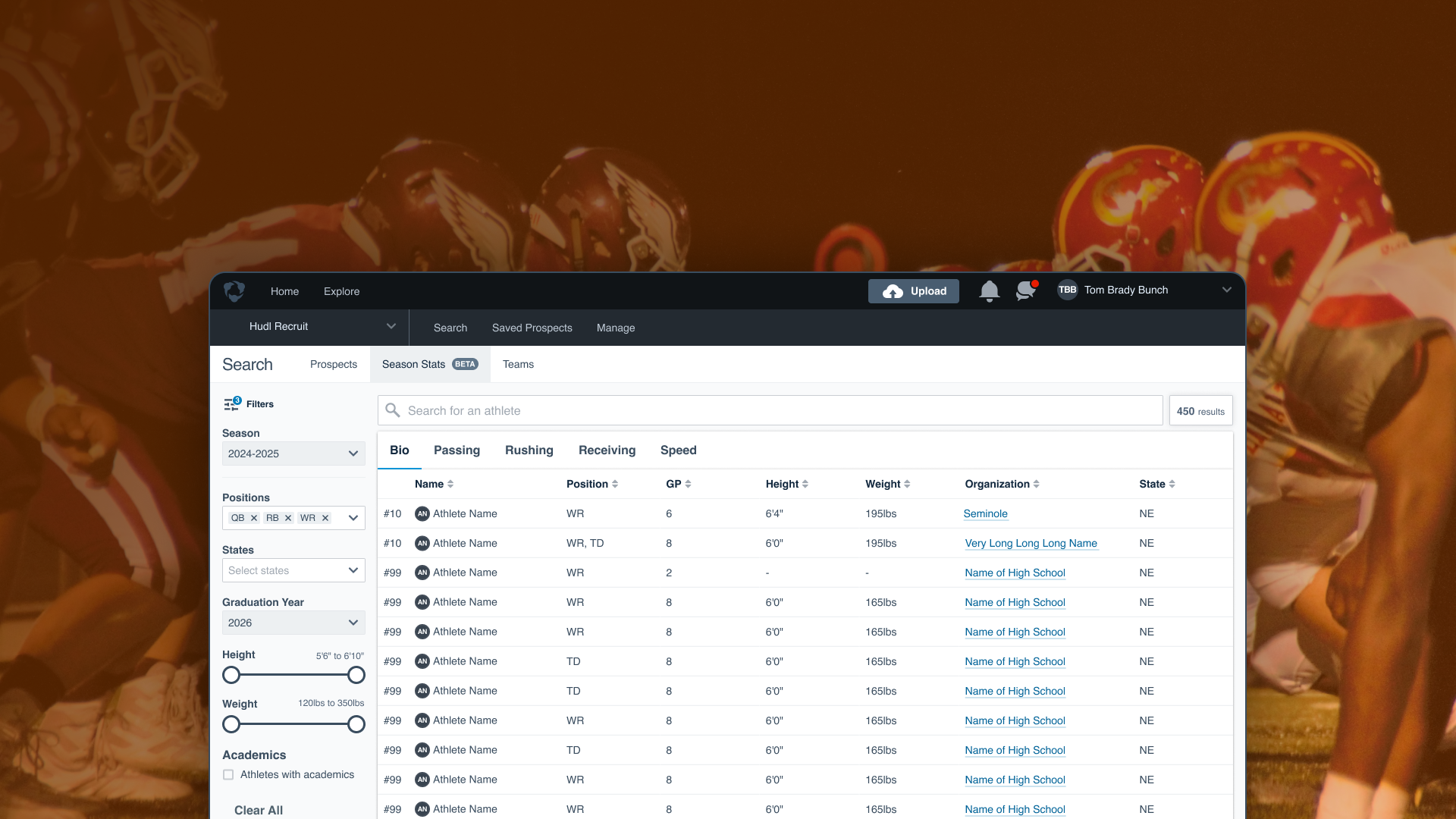
This project was part of my work as a Product Designer at Hudl. I focused on improving the athlete evaluation workflow for college recruiters. The project started with an opportunity in player tagging for American football. By tagging individual player in games, we were able to generate more accurate and detailed playlists with the correct video footage. Since recruiters primarily use Hudl to access game film, this opened the door to using data to make video more useful and efficient to navigate.
PROBLEM
Division 1 college recruiters evaluate thousands of athletes each season, but their tools were disconnected and difficult to use. The existing workflow relied heavily on manual playlist creation and video review, often without the data needed to support confident decision-making. Recruiters needed a faster and smarter way to discover, evaluate, and track athletes. The solution needed to combine objective performance data with contextual video clips in a single, efficient workflow.
OUTCOME
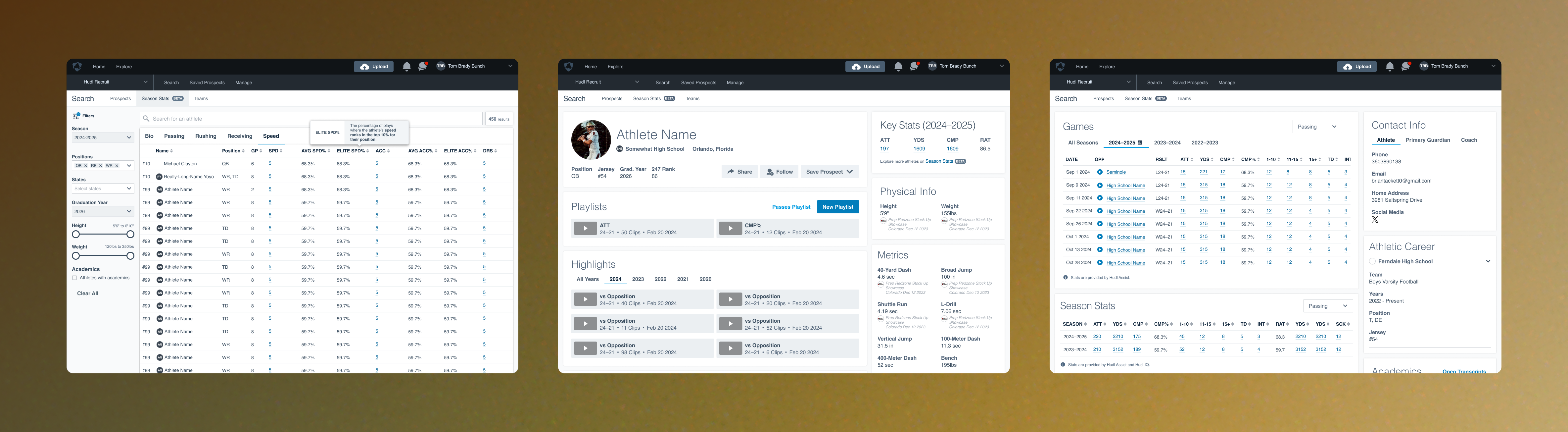
We released an MVP experience that integrated advanced data directly into Recruit. Performance stats were linked to video cutups, and recruiters could generate playlists automatically based on metrics. The MVP included 450 top athletes and laid the foundation for a more scalable and data-driven recruiting platform. This work shaped the next phase of the product, where Recruit becomes a central evaluation hub that offers deeper filters, stat benchmarking, athlete tracking, and a more unified workflow across recruitment tools.
.png)
.png)
We used analytical tool to track early product engagement and collected qualitative feedback from the users
.png)
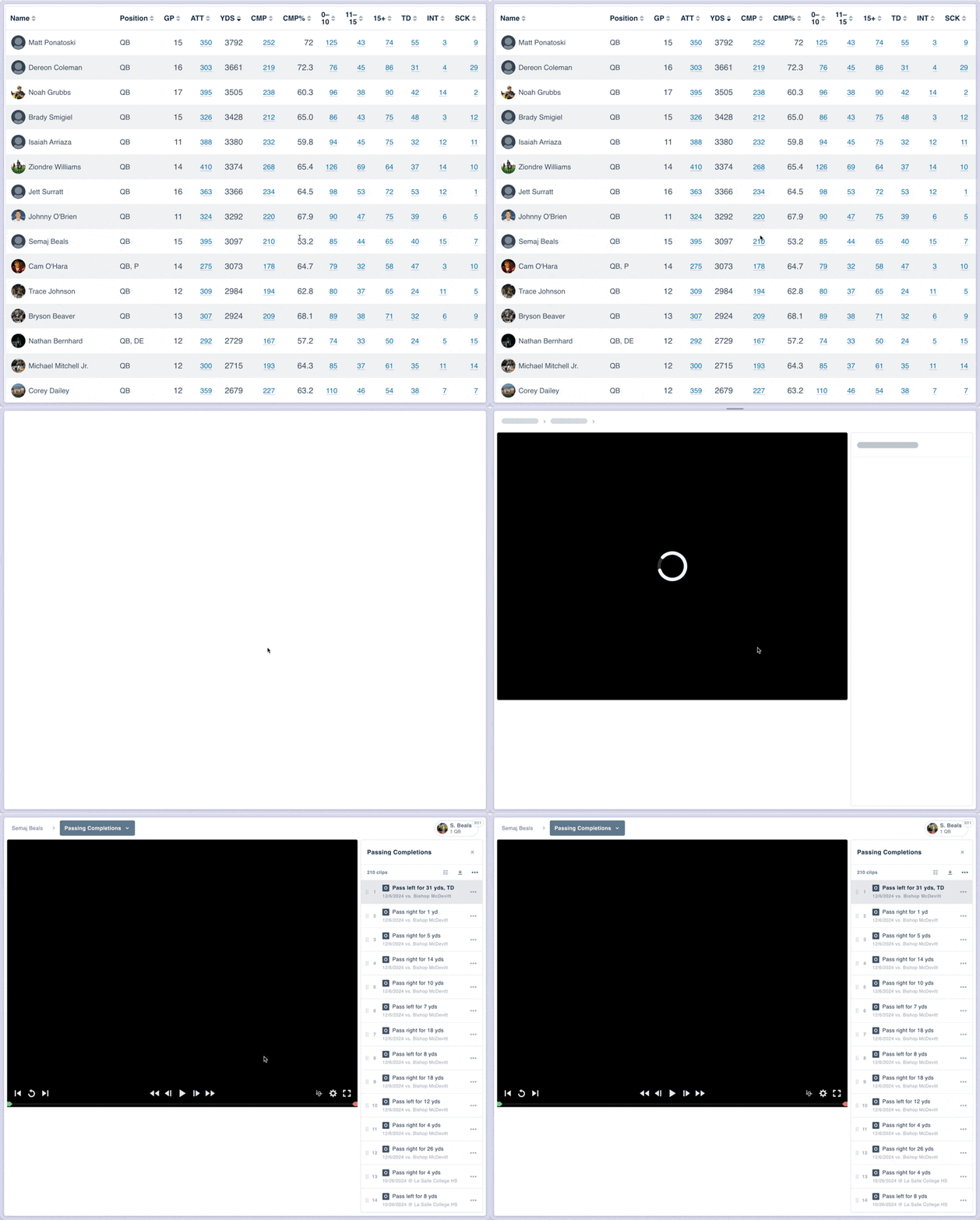
This project challenged me to design within complexity. We had to balance system constraints, specific data, and real user needs. One of the most rewarding parts was learning how recruiters think, what data matters most, and how to present that data in a way that is clear, builds trust and enables faster decisions. I gained experience working across teams, collaborating with different product teams and domain experts to create an experience that combined functional depth with a clear, focused design solution. I’m proud of how this MVP laid a strong foundation for Recruit’s evolution and how design played a central role in delivering user and business value.
